Featured
Table of Contents
That maximizes money in the short-term, and you might have 3 to 4 years to conserve toward the negotiation quantity. Very damaging to credit rating, mainly due to missed payments and an adverse "worked out" mark that could remain on your credit scores record for as much as 7 yearsMay be only option if various other options (financial debt combination, balance transfer credit scores cards, financial debt mercy) aren't possibleTypically needs a fee to the 3rd party, which could balance out some or all of the cost savings from debt settlementMay assist you prevent insolvency if you have actually missed numerous paymentsNot all financial institutions deal with debt settlement firms Financial debt forgiveness might be best for you if you are experiencing a monetary difficulty that makes it virtually impossible to pay down your debt equilibriums.

With a DMP, you make one month-to-month repayment to the credit score therapy firm. Those funds are then dispersed to financial institutions of your unsecured debts, such as charge card and installment financings. The agency deals with your creditors to decrease rates of interest or forgo costs, yet some creditors might decline such giving ins.
It can aid you pay down financial obligation if you're able to protect a car loan price that's lower than the ordinary rate of the accounts you're settling. You should avoid from racking up financial obligation on those recently cleared accounts or your financial debt might expand also higher.
That offers you plenty of time to get rid of or significantly decrease your equilibrium while making interest-free settlements.
How Ongoing Support and Aftercare Programs can Save You Time, Stress, and Money.
You may require it if your financial institution or a collection company ever before attempts to gather on the financial obligation in the future. When a lender forgives $600 or more, they are required to send you Form 1099-C.
Debt forgiveness or negotiation practically always hurts your credit history. Anytime you clear up a financial obligation for much less than you owe, it may show up as "cleared up" on your credit scores report and impact your credit report for seven years from the date of negotiation. Your credit score can additionally drop substantially in the months causing the forgiveness if you fall back on payments.
Not known Incorrect Statements About Documents to Gather When Pursuing Financial counseling for veterans in North Carolina who feel trapped by credit card debt
This situation frequently results from underreporting earnings, not submitting returns on time, or inconsistencies discovered throughout an Internal revenue service audit. The consequences of accumulating tax financial debt are severe and can consist of tax liens, which offer the Internal revenue service a lawful case to your residential property as safety and security for the debt.
Greater rate of interest on available credit history. Wages and Financial institution Accounts IRS can impose (take) wages and checking account to satisfy the financial obligation. Reduced revenue and disruption of crucial financial procedures. Property Seizure In severe instances, the IRS can confiscate and sell property to cover the financial obligation. Loss of beneficial assets and prospective variation.
Anxiety, anxiety, and other psychological health and wellness concerns. Social Stigma Encountering lawful activity from the IRS can bring social preconception. Damages to track record and relationships. Employment Opportunities An inadequate credit rating as a result of tire financial obligation can restrict job opportunity. Trouble finding or keeping a job. Government Benefits Tax obligation financial debt might influence eligibility for government benefits, such as Social Safety and Medicaid.
Get This Report about Credit Card Debt Relief Options
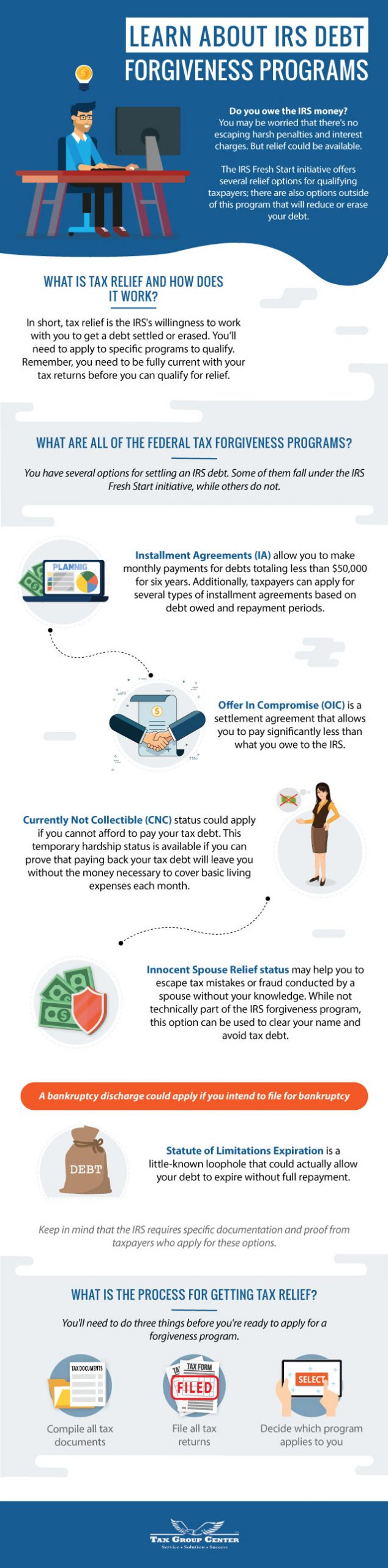
The OIC thinks about a number of variables, consisting of the taxpayer's revenue, expenditures, possession equity, and ability to pay. Successfully negotiating an OIC can be intricate, calling for a complete understanding of the internal revenue service's standards and a strong debate for why your deal aligns with your capability to pay. It is essential to keep in mind that not all applications are accepted, and the procedure needs thorough financial disclosure.
The IRS assesses your overall monetary circumstance, including your earnings, expenses, possession equity, and ability to pay. You have to additionally be existing with all declaring and repayment demands and not be in an open insolvency case. The IRS likewise considers your compliance history, assessing whether you have a record of timely filing and paying tax obligations in previous years.
The Free Educational Debt Counseling Workshops for Families PDFs
The application procedure for a Deal in Compromise entails a number of in-depth actions. First, you need to finish and send internal revenue service Form 656, the Offer in Concession application, and Form 433-A (OIC), a collection information declaration for individuals. These kinds call for extensive economic information, consisting of information concerning your income, financial debts, costs, and properties.
Back tax obligations, which are overdue taxes from previous years, can significantly enhance your complete IRS debt if not attended to promptly. This debt can build up rate of interest and late repayment penalties, making the initial amount owed much larger in time. Failing to repay tax obligations can cause the IRS taking enforcement actions, such as providing a tax obligation lien or levy versus your residential or commercial property.
It is crucial to attend to back tax obligations as soon as feasible, either by paying the total owed or by organizing a payment plan with the IRS. By taking positive actions, you can prevent the buildup of added interest and fines, and protect against a lot more aggressive collection activities by the IRS.
One typical reason is the belief that the taxpayer can pay the complete quantity either as a round figure or via a settlement plan. The IRS also thinks about the taxpayer's earnings, expenditures, asset equity, and future earning capacity. If these aspects suggest that the taxpayer can pay for to pay more than the supplied amount, the IRS is likely to decline the offer.
Why Hesitating to Get Debt Help Makes Things More Difficult - Questions
It is vital to provide exact and complete info in your application and to consult with a tax specialist to improve the chances of acceptance. Handling internal revenue service financial debt can be complicated and complicated. Tax professionals, such as CPAs, tax attorneys, or signed up agents, can supply indispensable support. They have the competence to navigate the complexities of tax regulation and internal revenue service treatments.

Table of Contents
Latest Posts
The Best Strategy To Use For Prevalent False Beliefs About Debt Forgiveness
The smart Trick of Knowing Your Rights Related to Debt Forgiveness That Nobody is Talking About
The Facts About National Resources for Financial Assistance Revealed
More
Latest Posts
The Best Strategy To Use For Prevalent False Beliefs About Debt Forgiveness
The smart Trick of Knowing Your Rights Related to Debt Forgiveness That Nobody is Talking About
The Facts About National Resources for Financial Assistance Revealed